
How to Optimize Your Brand for AI Answer Engines Like ChatGPT, Perplexity, and Gemini in 2026
You already know AI search is changing everything.
This is the step-by-step playbook to actually do something about it – before your competitors do.
- Hirush Global Team
- Hirush Global LLP · Perinthalmanna, Kerala, India · GEO & LLMO Specialists
Open ChatGPT right now. Type: "What's the best SEO agency in Kerala for AI search?" Does your business show up in the answer? If it doesn't – that's not a ranking problem. That's a visibility problem. And it won't be fixed by the same SEO tactics you've been using for the last five years.
Why AI Search is Different
AI answer engines like ChatGPT, Perplexity, and Gemini don't work the way Google does. They don't show you ten links and let the user decide. They make the decision for the user – surfacing one, two, maybe three brands in the answer. If your brand isn't one of them, you don't exist at that moment.
This guide is not about explaining what AI SEO is. If you want that, start with our AI-First SEO overview. This guide is about what to actually do – the specific steps to optimize your brand so AI engines understand you, trust you, and recommend you.
At Hirush Global LLP, based in Perinthalmanna, Kerala, India, this is exactly what we do for clients across Kerala, the Gulf, and globally. Here's the framework we use.
First: Understand How AI Answer Engines Pick Their Sources
Before you can optimize for something, you have to understand how it makes decisions. ChatGPT, Perplexity, and Gemini all work differently – but they share a common logic when deciding which brands to mention.
They're not scanning your keyword density. They're asking a different set of questions about your brand:
- Is this brand clearly defined? Can I understand exactly what they do, who they serve, and where they operate – just from their website and what's written about them online?
- Is this brand consistent? Does the same name, description, and contact information appear across multiple sources – website, directories, Google Business Profile, social media?
- Is this brand trusted? Do other credible sources – publications, directories, other websites – mention or link to this brand?
- Is this brand an authority on this topic? Do they have real, in-depth content that answers questions in their niche – not just a services page?
If the answer to all four is yes, the AI engine is far more likely to surface your brand when a relevant question comes in. If any of these are unclear or inconsistent, the AI simply moves on to a brand it understands better.
Engine-specific Preferences:
- ChatGPT: Uses Bing index + web browsing. Favours brands with strong structured content and consistent mentions across the open web.
- Perplexity: Always shows citations. Actively crawls and rewards pages that answer questions directly and are structured clearly for extraction.
- Gemini: Deeply tied to Google's Knowledge Graph and E-E-A-T signals. GBP, schema, and authoritative backlinks matter most here.
Step 1 – Make Your Brand Entity Crystal Clear
An "entity" in SEO terms is simply a clearly defined thing that AI and search engines can recognize and trust – a brand, a person, a place, a service. The problem most businesses have is that their online presence is vague. Their website says "we provide quality services" without ever being specific enough for an AI to understand and confidently recommend them.
Fix this first. On your homepage, About page, and every key service page, clearly state:
Entity Definition Checklist
- Company name – exact, consistent. "Hirush Global LLP" – not "Hirush", not "Hirush Global", not both mixed across pages.
- What you do – one clear sentence. "We provide GEO, LLMO, and AI-first SEO services for businesses in Kerala, the Gulf, and globally."
- Who you serve – industry, location, business type. Not "all businesses" – be specific.
- Where you are – full address. Hirush Global LLP: 2nd Floor, Padipura Trade Centre, Bypass Jn, Calicut Road, Perinthalmanna, Malappuram, Kerala – 679322.
- Contact details – phone (+91 8086415636) and email on every key page, not just the Contact page.
This sounds basic. But the number of business websites that have three different versions of their company name across their own pages – and a fourth version on Google Business Profile – is surprisingly high. AI engines see that inconsistency and lose confidence in the brand.
Step 2 – Audit Your Current AI Visibility (Do This Today)
Before you optimize, you need to know where you currently stand. This takes 15 minutes and costs nothing.
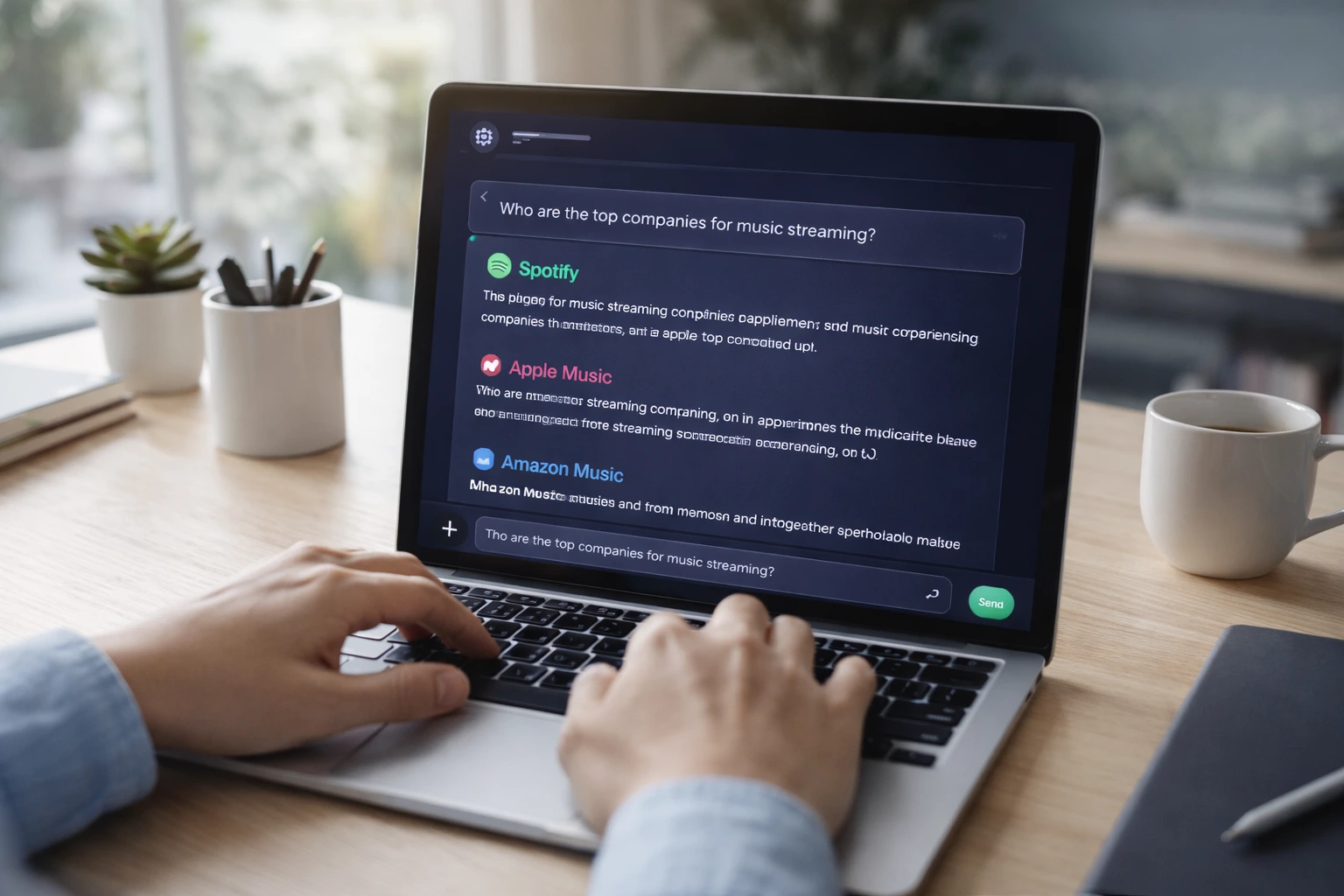
AI Visibility Audit
- Open ChatGPT, Perplexity, and Gemini in three separate tabs.
- Type the question your ideal customer would ask – for example: "Best SEO agency in Kerala for AI search optimization" or "Who are the top GEO and LLMO service providers in India?"
- Note which brands appear in the answer. Are you there? Who is?
- Now search your brand name directly: "Tell me about [Your Brand Name]" – does the AI have accurate information about you?
- Note any inaccuracies, missing details, or wrong descriptions – these are your priority fixes.
This audit tells you two things: what gap exists between you and the brands being recommended, and how much the AI currently knows (or doesn't know) about your business. Both answers shape your next steps.
Step 3 – Build Content That AI Can Actually Use
This is where most of the real work happens. AI answer engines pull from published content – but not all content is equally useful to them. A page full of keyword-stuffed paragraphs and vague claims is hard for an AI to extract and cite confidently.
Content structure that AI engines extract best
- Direct question-and-answer format – H2 or H3 headings that mirror the actual question, followed by a clear, 2-3 sentence answer before going deeper.
- FAQ sections – real questions your clients ask, with specific answers. Not "What is SEO?" – instead "What is the difference between GEO and traditional SEO for a business in Kerala?"
- Specific, verifiable facts – data points, years, locations, numbers. Vague content is hard to cite. Specific content is easy.
- Clear entity mentions – your brand name, location, and service names mentioned naturally throughout the content – not crammed in, but consistently present.
- Topical depth over breadth – one well-structured 1,500-word guide on "LLMO for Kerala businesses" is far more useful to AI than five shallow 300-word posts on loosely related topics.
"AI engines don't browse your website the way a human does. They extract. They look for the clearest, most specific answer to a question – and they cite the source that gave it to them most cleanly. Structure your content for extraction, not just for reading."
— Hirush Global LLP, Perinthalmanna, Kerala
Step 4 – Fix Your Schema and Technical Signals
Schema markup is the part of your website's code that tells search engines and AI systems – in plain structured language – exactly what your business is, what it offers, and where it operates. Most websites either skip it entirely or implement it incorrectly.
Priority schema types for AI visibility
- Organization schema – your full company name, logo, address (Perinthalmanna, Kerala for Hirush Global clients), phone, email, social profiles, and founding date.
- Service schema – each service you offer defined separately: GEO, LLMO, technical SEO, content strategy. AI engines use this to match your brand to service-specific queries.
- FAQ schema – every FAQ section on your site should have structured FAQ markup. This gives AI engines a clean, pre-formatted answer set to pull from.
- Article / BlogPosting schema – on every blog post, marking up the author, publish date, and headline. This supports E-E-A-T signals AI engines use to evaluate content credibility.
- LocalBusiness schema – even for globally operating agencies. If you're based in Kerala and serve clients globally, both dimensions need to be declared.
Step 5 – Build Your Brand Presence Outside Your Website
Your website alone is not enough. AI engines triangulate their understanding of your brand from multiple sources – if they only find information in one place, confidence in the brand stays low.
Off-site brand presence checklist
- Google Business Profile – fully completed, consistent NAP, active reviews, updated services. Gemini pulls heavily from this.
- Reputable directory listings – Clutch, GoodFirms, DesignRush for agencies; industry-specific directories for other sectors. Consistent name, address, phone across all.
- LinkedIn company page – fully built out, with services, location (Perinthalmanna, Kerala), and regular content. AI engines treat LinkedIn as a high-trust source.
- Press mentions and guest content – even one or two mentions in credible publications dramatically increases AI confidence in a brand.
- Client reviews with specifics – "Hirush Global improved our AI search visibility in three months" is more useful to an AI engine than "great service, 5 stars."
The goal is simple: when an AI engine goes looking for information about your brand, it finds the same clear, consistent story told across multiple credible sources. That's what builds the kind of trust that gets you recommended.
Step 6 – Track the Right Metrics
If you're optimizing for AI answer engines but only tracking Google rankings, you're flying blind. AI visibility requires a different measurement approach.
What to track for AI engine visibility
- Brand mention frequency in AI answers – manually check your key queries weekly in ChatGPT, Perplexity, and Gemini. Track whether your brand appears and in what position.
- Impression growth in Google Search Console – specifically for FAQ, how-to, and question-format pages. Rising impressions with low CTR usually signals AI Overview or featured snippet capture.
- Direct traffic and branded search growth – when AI engines recommend you, users often search your brand name directly afterward. Branded query growth is a proxy for AI referral impact.
- Citation tracking – tools like Perplexity's source panel show you which pages are being cited. Track which of your pages appear and which don't.
The Mistake Most Brands Make – and Why It's Costing Them
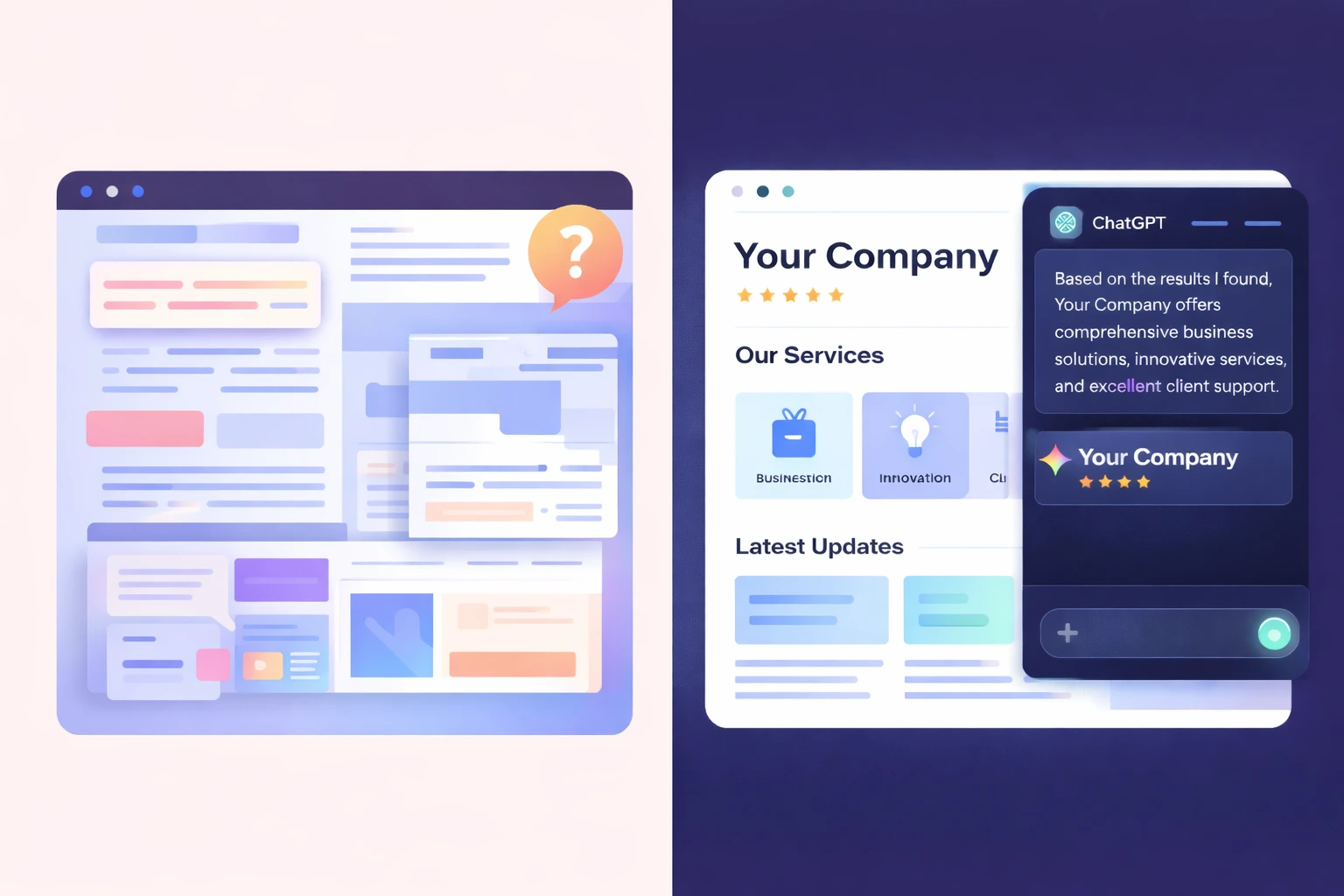
The most common mistake businesses make when they start thinking about AI optimization is treating it as a separate task from SEO – something they'll "get to later" after fixing their Google rankings.
The reality is the opposite. The same technical foundation that makes your site visible in Google – clean structure, fast loading, clear content, strong entity signals – is the same foundation AI engines use to understand and trust your brand. You're not building two separate things. You're building one strong base that works across all search surfaces.
The second mistake is waiting for a perfect moment to start. AI engine optimization is not a one-time project. It's an ongoing process of making your brand easier to understand, more consistent across the web, and more authoritative in your niche – month by month. The brands that start now will have a significant head start over those who wait another year.
What This Looks Like in Practice – A Kerala Business Example
A business in Kerala – say, a construction materials supplier serving clients in Saudi Arabia — comes to Hirush Global. When we check their AI visibility, ChatGPT and Perplexity don't mention them at all when answering "trusted building materials suppliers for KSA projects." Google has them ranking somewhere on page two.
The problem isn't their product or their reputation. The problem is that their online brand entity is unclear – three versions of their company name across different pages, no FAQ content, no schema markup, a Google Business Profile that was set up once and never updated, and a blog with two posts from 2023.
Over four months, we work through exactly the steps above – entity clarity, structured content, schema, off-site presence, and tracking. By month four, they appear in Perplexity answers for their core queries. Their branded search volume increases. Inquiries from the Gulf market pick up.
That's what AI engine optimization actually looks like when done properly – not a quick fix, but a compound improvement that builds over time.
FAQ
How long does it take to see results from AI answer engine optimization?
Most brands see measurable improvements in AI visibility within 3–5 months of consistent optimization. Quick wins – like schema implementation and entity clarity fixes – can show impact faster. Building authority and off-site signals takes longer but compounds over time.
Do I need separate strategies for ChatGPT, Perplexity, and Gemini?
Not entirely. The foundation – clear entity definition, structured content, consistent NAP, schema markup, and authority signals – works across all three. The differences are in emphasis: Perplexity rewards citable, structured pages most directly; Gemini is closely tied to Google's E-E-A-T and Knowledge Graph signals; ChatGPT responds well to strong web presence and consistent brand mentions. A good AI SEO strategy addresses all three without requiring completely separate approaches.
Is this different from traditional SEO?
AI engine optimization builds on traditional SEO – it doesn't replace it. If your technical SEO is broken, your AI visibility will suffer too. But AI optimization adds a layer on top: entity clarity, structured content for extraction, and off-site brand consistency that goes beyond just building backlinks. Think of it as SEO upgraded for a world where the answer engine, not the user, makes the first decision.
Can a business in Kerala rank in AI answers globally?
Yes. Geographic location matters for local queries, but for service or expertise queries – "best LLMO agency," "AI SEO for construction suppliers" – what matters is topical authority and brand clarity, not physical location. Hirush Global LLP, based in Perinthalmanna, Kerala, serves clients in India, the Gulf, and internationally precisely because AI search is not limited by geography the way local directory listings are.
What is LLMO and how does it relate to this?
LLMO – Large Language Model Optimization – is the specific practice of optimizing how your brand is understood and represented within the training data and live retrieval systems of large language models like GPT-4, Gemini, and Claude. It's the most technical layer of AI search optimization, focused on brand entity clarity, consistent factual representation, and authority signals that LLMs use when generating answers. Hirush Global offers LLMO as a dedicated service alongside GEO and traditional SEO.
Is your brand showing up in ChatGPT, Perplexity, and Gemini answers?
Hirush Global LLP helps businesses in Kerala, the Gulf, and worldwide build the kind of AI-ready brand presence that gets recommended – not skipped. Let's audit your current visibility and build a plan.
#AISearchOptimization #GEO2026 #LLMO #ChatGPTSEO #PerplexityOptimization #GeminiSEO #HirushGlobal #SEOKerala #AIVisibility2026 #BrandOptimization
Ready to Adapt to the AI Era?
Let's audit your current visibility and build a plan to dominate AI answer engines in 2026.
Get Your AI Visibility Audit ↗